Why Multipliers Matter
Multipliers change leverage. They don’t alter fairness, but they determine how much a good board pays when it finally lands. Designers use them to move a chunk of RTP into high-drama moments especially inside features so sessions feel quiet until a multiplier intersects with coverage (lines, ways, clusters), and then explode.
Two Core Families
Before comparing details, remember both types simply reallocate value: less in ordinary taps, more when the stars align.
- Win multipliers apply to the entire payout of that evaluation (e.g., ×2, ×3, ×10). They’re common in cascade ladders and free spins, often rising with each consecutive clear.
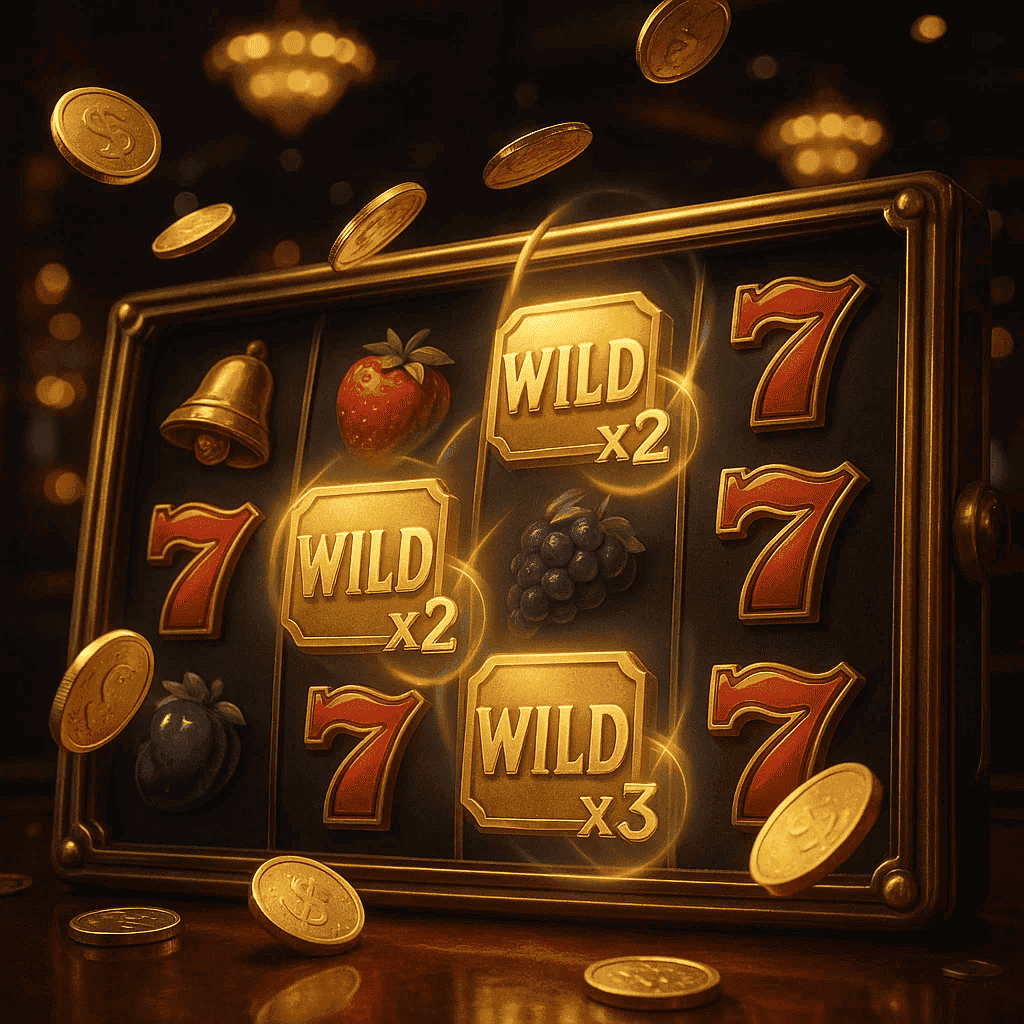
- Symbol multipliers attach to specific symbols (often wilds). They multiply only the lines/ways that include that tile and can stack when multiple multiplier symbols connect.
After the list, note the feel: win multipliers create smooth “late-spin surges”, while symbol multipliers produce spiky, geometry-dependent peaks.
Where You’ll See Them
Win multipliers show up in cascade/avalanche games and in free spins with “escalation” rules. Symbol multipliers appear on wilds, premium tiles, or mystery reveals occasionally in base play, but more often during features. Some titles combine both: a rising round multiplier and wilds that carry x2/x3, which pushes volatility high.
Math in Plain English
A quick intuition helps. Win multipliers scale whatever you earned; whether your win is $2 or $20, a ×5 makes it five times larger. Symbol multipliers are conditional: a ×3 wild does nothing unless it participates in the line/ways win. Two multiplier wilds on the same route can multiply together (e.g., ×2 ×3 = ×6) if the rules allow, which is why overlaps create massive outliers.
How Designers Balance Power
Because multipliers raise ceilings, devs trim base values or lower hit rate to keep RTP stable. That’s why you may feel long lulls: the math is “saving” return for those multiplier moments. Games that allow stacking (multiple multiplier wilds combining) typically make stacks rare; games with progressive win multipliers during cascades usually start small to make late steps feel earned.
Bankroll & Tempo Guidelines
Treat heavy-multiplier titles as medium-to-high volatility. Downshift stake to buy 100–200 paid spins, especially if multipliers mostly live in features. When symbol multipliers stack, expect feast-or-famine: slow your click speed and pre-set a stop-loss and a win ceiling so one huge hit doesn’t tempt a spiral of bigger bets.

Quick Checklist Before You Spin
Before the bullets, remember: you’re mapping the game’s leverage points, not looking for secrets.
- Where do multipliers live (base vs bonus)?
- Do symbol multipliers stack with each other or with round multipliers?
- Are multipliers attached to wilds, mysteries, or upgrades?
- Do cascades reset the round multiplier or keep it growing?
After the list, pick a stake that keeps you calm between highlights; multipliers pay for patience, not speed.
Conclusion
Multipliers are the amplifiers of slot design. Win multipliers raise the volume on everything; symbol multipliers reward perfect geometry. Learn where they appear and whether they stack, then set a stake that survives the quiet stretches so when leverage arrives, you’re still in the chair to hear it.