What “Cluster Pays” Means
Cluster systems ignore paylines and even adjacency by reels. A win forms when a group of matching symbols touches orthogonally (some games also count diagonals). Once a cluster forms, it pays according to size and symbol tier, then the grid usually cascades, winning tiles vanish and new ones drop, potentially chaining more wins inside the same paid spin. The randomness is unchanged; the mechanic simply lets a single wager evaluate several times.
Why It Feels So Dynamic
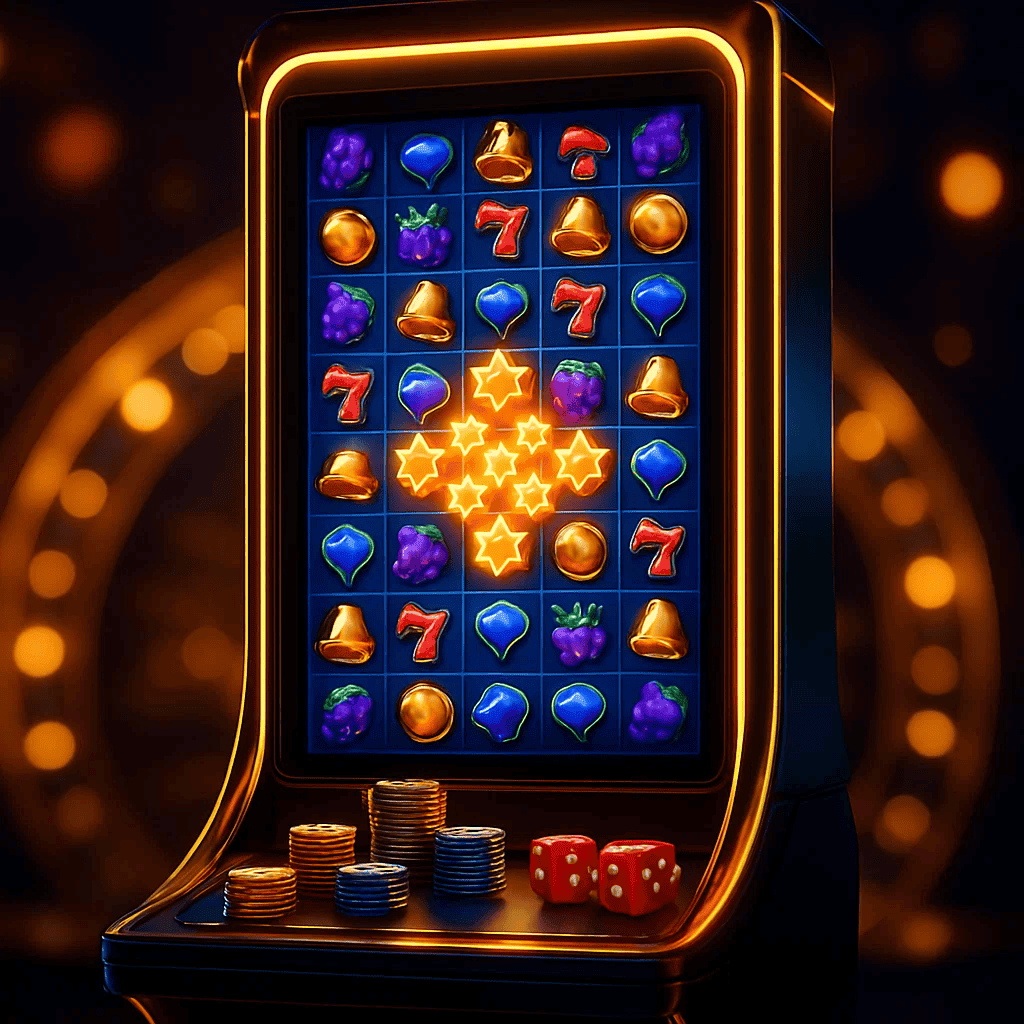
Because boards refill immediately after wins, you see motion and possibility on every evaluation. That activity can mislead your gut. Lots of events do not mean lots of value. Designers balance frequent micro-wins with rarer, high-multiplier outcomes, parking a chunk of RTP in chain reactions so that some paid spins become mini-stories: clear → drop → connect → repeat.
Core Building Blocks
Before the quick tour of common ingredients, remember that each block moves return around; none changes fairness.
- Cascades (refills): After a cluster pays, symbols fall from above (or appear from sides) to fill gaps, possibly creating new clusters.
- Incremental multipliers: Each consecutive cascade increases a multiplier for the current paid spin, turning late chains into high-leverage moments.
- Symbol upgrades/collection: Collected tokens upgrade lows to mids or mids to premiums for the rest of the round, raising the ceiling.
After the list, tie it back to pacing: the more the game stacks multipliers and upgrades, the spiky results become quiet stretches between “good boards” are normal.
Reading the Info Panel
Look for the minimum cluster size (often 5+), whether diagonals count, and how multipliers behave (reset each paid spin or persist during features). Check if blockers (e.g., stones) or wild generators exist; blockers raise difficulty early and amplify improvement when cleared.
Stake, Tempo, and Session Planning
Plan for attempted windows rather than minutes. For multiplier-centric clusters, use a slightly lower stake and aim for 100–200 paid spins so you actually witness full cascade ladders. Avoid turbo when tilted; a hot board can resolve in seconds, and forcing speed compresses variance per minute. If a demo exists, note how often you get to 3+ cascades the round’s “engine” typically starts paying meaningfully there.
Practical Play Checklist
Before the checklist, remember that you’re scouting rhythm, not a secret edge.
- Minimum cluster size and whether wilds can join clusters.
- How multipliers grow and whether they carry into features.
- Presence of blockers or symbol upgrades, and how fast you unlock them.
After the list, decide: if reaching 3–5 cascades feels rare and draining at your budget, switch to a flatter title or drop stake.
Misreads to Avoid
A board that is almost cleared isn’t “primed”. Independence rules each refill step; the next paid spin is fresh. Likewise, pausing between clicks won’t improve cluster odds; use that pause to keep emotions in check, not to chase patterns.
Conclusion
Cluster pays turn each wager into a short sequence where space management and refills drive excitement. Understand minimum sizes, multiplier rules, and blockers, size stakes for patience, and you’ll enjoy the living-board feel without mistaking animation density for guaranteed value.